6–6Baseline
9–3Revision
Build an AI mock jury that reacts to your documents, testimony, video, and exhibits, then ask any juror follow-up questions. Each juror is configured for your venue and has a distinct life story, imperfect memory, varying attention, and local context. Use the panel to test try-or-settle decisions, evaluate expert witnesses, and see which facts and themes resonate as the case develops.
PatentedSOC 2 Type IIUsed by 12 Am Law 100 firms
Used on matters, claims, and research











“With all the changes to legal practice brought upon by AI, if you are not using it for trial work, you’re being left behind. The applications for trial, including thematic development, juror research, examination outlines, exhibit organization, and openings and summation presentations, are simply incredible. And if your lawyers are not doing this, you’re working with litigators, not trial lawyers. We try cases, now with the help of Viewpoints.ai.”
Upload your files and ask a question. A panel built for your venue answers in minutes.
A published head-to-head against a live mock jury, teams using it on live matters, and three decades of published research behind the method.
“We ran our materials through GPT and it gave the logical verdict. The Viewpoints jurors answered the way real people do, with the same inconsistencies, and matched what we saw in our live mock trial.”
“The simulated panel matched our mock jury and surfaced broader themes than we’d tested for.”
Within the hour you have the three things a strategy memo needs: the themes that move the panel, the verdict curve, and every juror’s reasons.
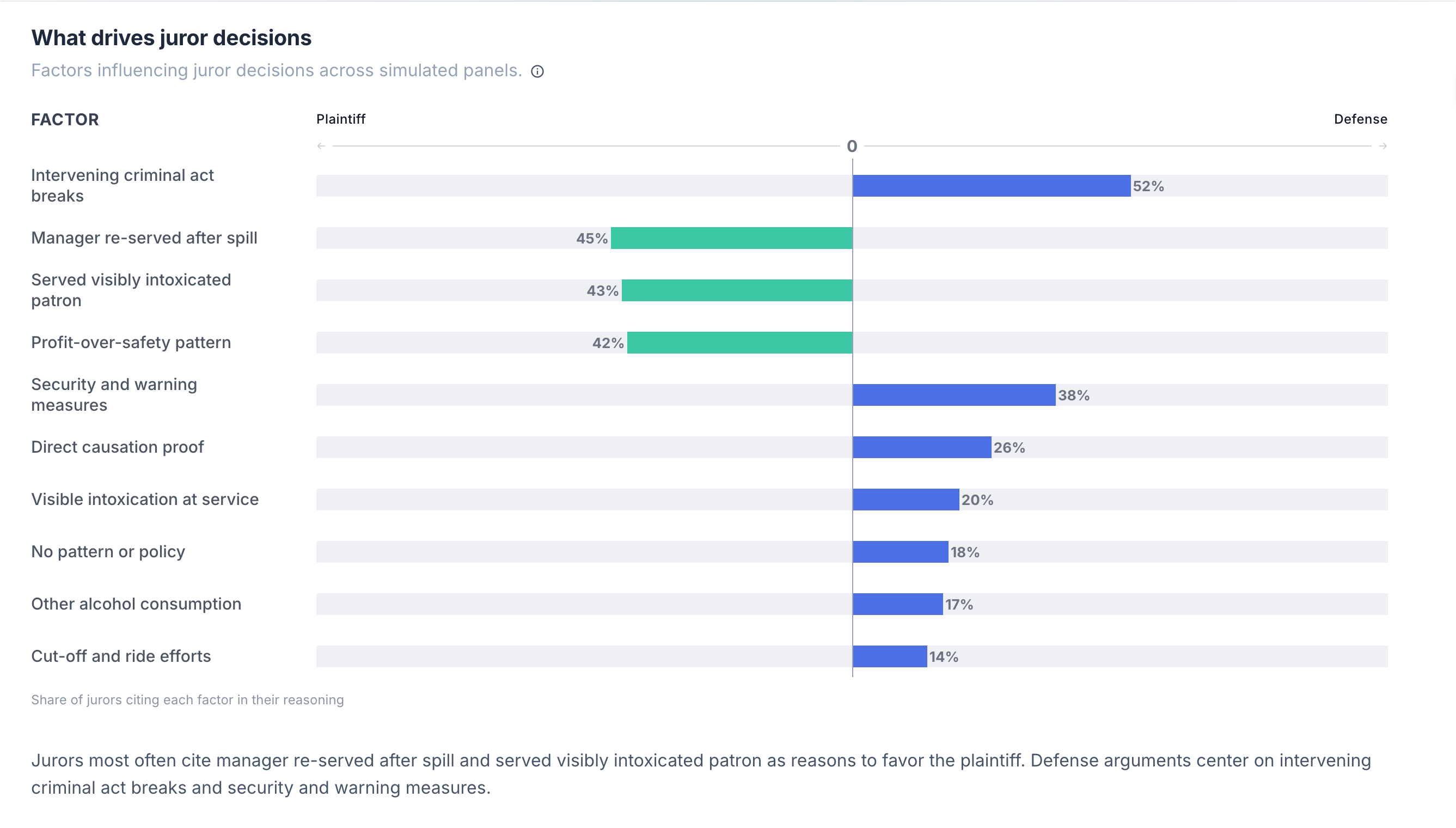
Rank the strongest plaintiff and defense drivers. Change the closing, expert, claim, or exhibit and compare the new run with the baseline.
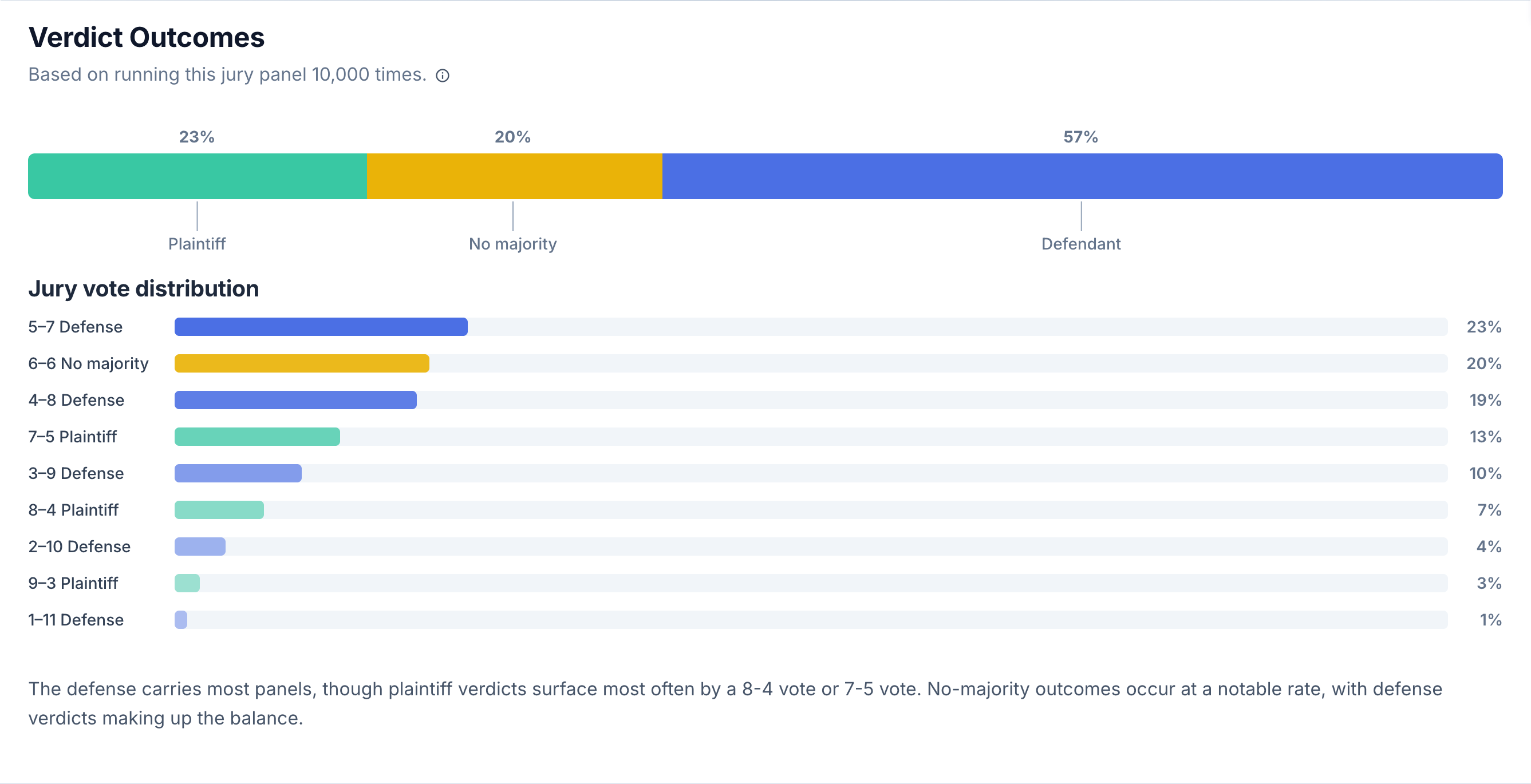
See the center of the distribution and the tail risk. Use the range to pressure-test reserves, authority, and settlement posture.
Trace a result back to the fact and reasoning that produced it.
“The worst injuries came from the crash afterward. That’s a separate event the bar didn’t cause.”
Every vote comes with the juror’s reasoning in their own words, ready for the strategy memo. And you can follow-up with Marcus 1:1 or put him in a focus group to get the why behind his answers.
Compare the baseline with a revised case presentation to see vote movement, damages shift, and which themes gained or lost pull.
Illustrative worked example. A live rerun compares the outputs from your own matter, venue, panel configuration, and revised materials.
Follow each juror through deliberation. See who holds firm, who changes sides, and when the last holdout joins the majority.
After the judge’s instruction, one juror moves to the plaintiff. A 4–2 split becomes 5–1.
One defense vote remains through the sixth ballot. The final vote brings unanimity.
What changed their minds? Follow up with the jurors to explore the reasoning behind the shift.
For insurers and claims teams: settle or try, decided with evidence
Ask a chatbot about your case and it gives you the logical answer. Juries are not logical machines. Each of our jurors is an individual LLM that carries the layers that shape a real verdict, so panels disagree, dig in, and surprise you the way real ones do.
In court · Two jurors with identical demographics can hear the same fact in opposite ways.
In court · Your best exhibit only works on jurors who take it in, and holdouts decide close cases.
In court · Attitudes about verdicts and damages shift with the news cycle.
Twelve jurors, each built this way, read your case and vote. Panels disagree, dig in, and surprise you the way real ones do, and every juror can tell you why.
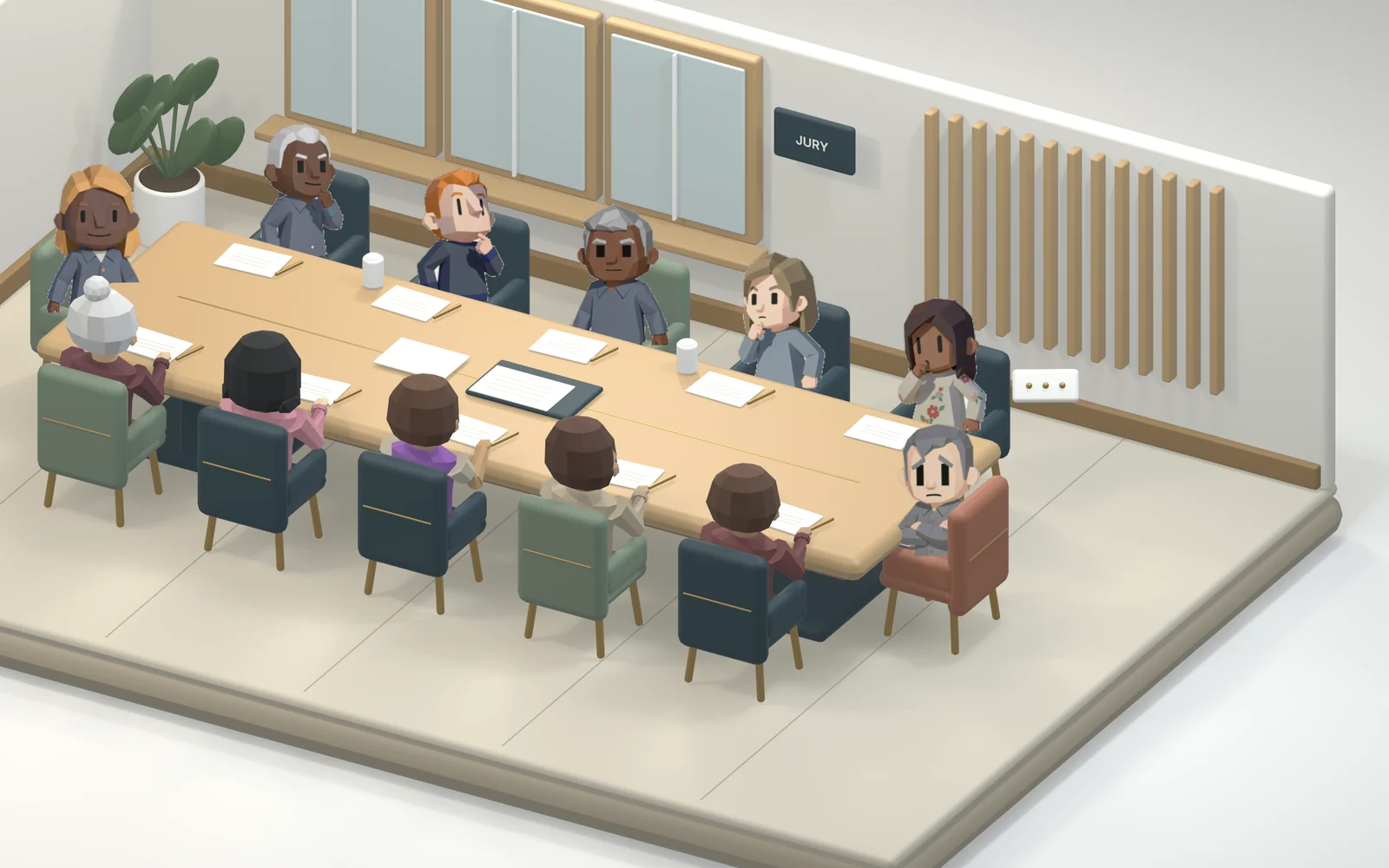
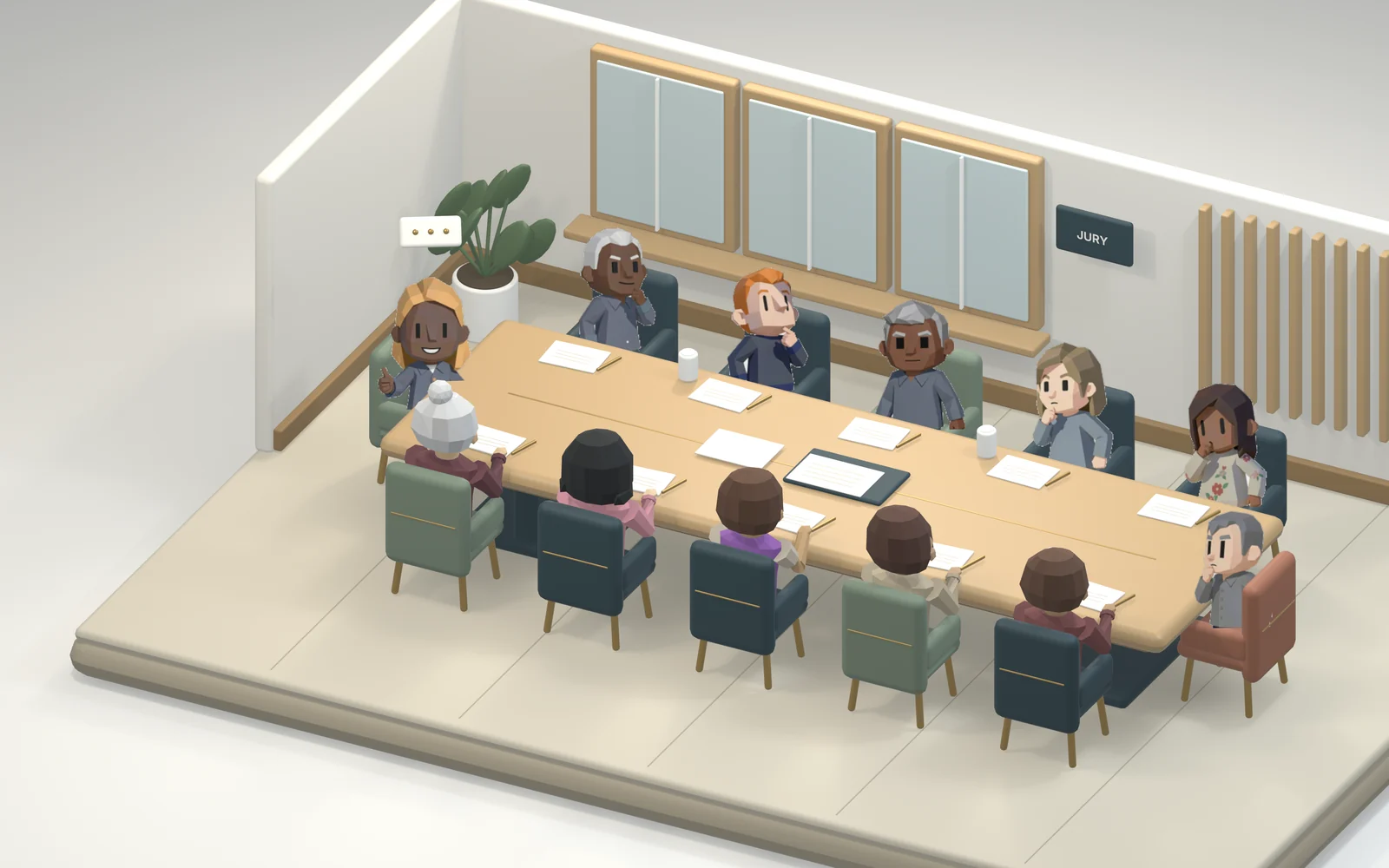
Group twelve simulated jurors into a panel. Follow who reframes the dispute, which arguments spread, and where holdouts remain. Use the exchange to generate questions and pressure-test strategy.

Most legal AI reviews documents, drafts contracts, or researches precedent. Viewpoints.ai models how people decide. It shows how jurors in your venue react to your story, your evidence, and your arguments, and which themes drive their votes.
Use the numbers as decision support, not a prediction guarantee. In the published DRI comparison, the verdict direction matched and the damages estimates differed. The most useful outputs are the themes behind votes, ranges, comparisons between case versions, and deliberation dynamics.
Group twelve simulated jurors into a panel. Follow who reframes the dispute, which arguments spread, and where holdouts remain. Use the exchange to generate questions and pressure-test strategy.
Configure the pool using available venue and demographic data, then draw panels across age, education, occupation, income, and modeled life experience.
Viewpoints.ai is SOC 2 Type II audited and uses strict access controls. For supported enterprise configurations, zero-data-retention arrangements cover AI providers, and case files are not used to train Viewpoints models. Data handling depends on your configuration and agreement, so confirm requirements with our team before submitting sensitive material.
Use the materials you would use to explain the matter to a mock jury: pleadings, briefs, transcripts, witness summaries, exhibits, photographs, claim documents, and video. Start with the materials that matter to the decision; our team will help organize them before launch.
Once your materials are gathered, launching a matter usually takes about 15 to 30 minutes. Most of that time is choosing the question, venue, and files. Gathering and reviewing the materials happens beforehand and varies by matter.
Backed by

We’ll build a panel matched to your venue for one of your live matters, then walk through the verdict, the themes behind it, and an interview with any juror you choose.
Book a demo